Programs

Community Impact

Be The Match

Donate Blood Stem Cells or Marrow

Research shows that cells from younger donors provide the greatest chance for transplant success. In fact, doctors request donors in the 18 to 44 age group more than 90% of the time.

Joining the registry is the first step toward finding out whether you could be a life-saving match for a patient in need.
 

Let’s Talk Blood Stem Cell and Marrow Donation

One patient. One donor. That is how life-saving blood stem cell and marrow transplant matches are made. Every three minutes someone is diagnosed with a blood cancer like leukemia. The cure is in the hands of ordinary people, and it could be you. Through the Rhode Island Blood Center’s partnership with Be The Match®, the National Marrow Donor Program, you may find you are the one and only match for someone who doesn’t have one in their family. Make today the day you sign up to save someone’s life.

To register, text FriendsForAdog to 61474 or join online.

How Blood Stem Cell and Marrow Donation Works

Sign Up Online

Complete some health questions and forms at join.bethematch.org/ribc to sign up. We will send you a cheek swab kit to do the rest.

Swab to Join the Registry

A simple cheek swab you can easily complete yourself is all it takes. Donors and patients are matched by their HLA (human leukocyte antigen) type, which is different from matching blood types. The cheek swab tells us your type. Return your swabs right away!

Doctors Search for Patient Matches

Once you are on the registry, doctors search for a close match for their patients. You may match someone who is waiting for a transplant now or become someone’s match in the future.

One in 430 Go On to Donate

About 1 in 430 people on the Be The Match Registry go on to donate. You could be someone’s only match and chance at a cure. If you match, the team will provide a personal information session covering every detail of the donation process.

What Happens if I’m The Match?

There are two ways to give if you match someone in need. In both cases, you usually go home the same day. Doctors choose the type of donation that allows for the best possible outcome for the person who needs the transplant.

75% of the time

Peripheral Blood Stem Cell Donation

Stem cells are collected through a process similar to donating blood platelets or red cells. You receive five daily shots in your arm to boost the number of stem cells in your bloodstream. The donation then takes four to six hours. Donors can experience bone pain from the stem cell boost, but recovery is usually quick—just one or two days after the donation.

25% of the time

Marrow Donation

Marrow donations are performed at a hospital under anesthesia, so you do not feel pain during the procedure. Doctors remove a small amount of marrow from your pelvic bone with a needle. Recovery is usually quick, though some donors may experience aches and pains for several days to a few weeks. Your marrow naturally replenishes itself in four to six weeks.

+ Your Commitment

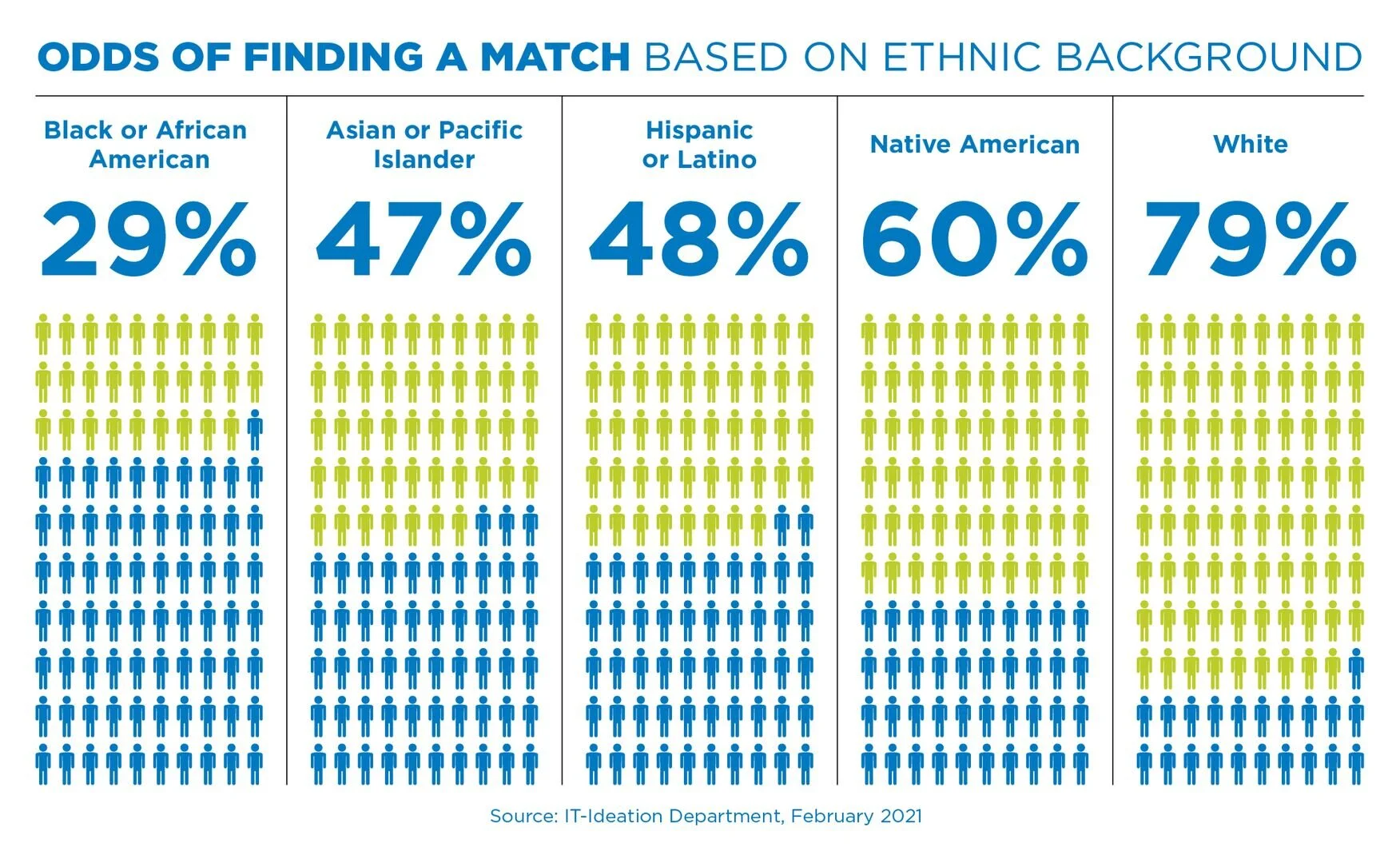
Blood stem cell donor registry disparity graphic

I Understand That:

  • By joining the registry, I am saying I am willing to donate to any patient in need.
  • The cheek swab I gave when I joined was only used to add me to the registry. It was not a donation for a patient.
  • I will be listed on the registry until I am 61, unless I inform Be The Match® that I’m unwilling or unable to donate.

If I Match a Patient:

  • I will respond quickly.
  • I will be asked to give a blood sample for further testing.
  • I will be asked to commit 20 to 30 hours over a four- to six-week period to attend appointments and donate.
  • If I donate peripheral blood stem cells (PBSC), I will receive injections of a drug called filgrastim to increase the number of blood-forming cells in my bloodstream.
  • If I donate marrow, anesthesia will be used.

I Promise To:

  • Keep my NMDP contact information up to date.
  • Share my decision to join the registry with family and friends so I have their support if called as a match.

Can I Donate Blood Stem Cells or Marrow?

Some conditions that would prevent you from becoming a donor:

  • Recent back surgery, or severe or ongoing back problems
  • Autoimmune/neurological disorders (MS, lupus, rheumatoid arthritis, fibromyalgia)
  • Being an organ or marrow transplant recipient
  • Significant obesity
  • Current sleep apnea
  • Hepatitis
  • HIV
  • Most forms of heart disease or cancer
  • Chronic lung disease
  • Diabetes requiring insulin or diabetes-related health issues
  • Diseases that affect blood clotting or bleeding